
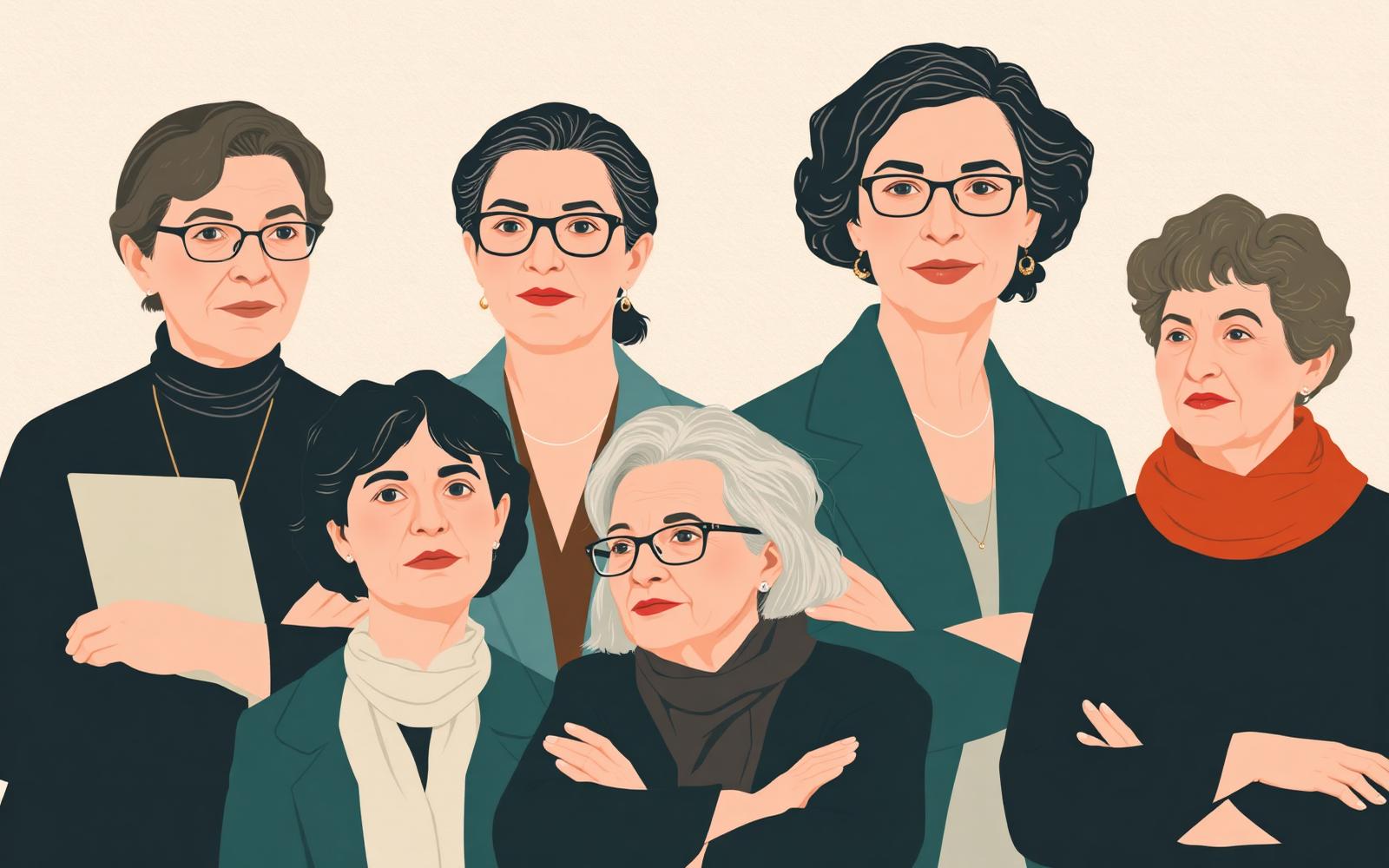
Economics has long been a male-dominated field, and yet the arc of the discipline has been bent, again and again, by women who refused to accept its blind spots. The five economists below built theories, ran experiments, and shaped policy that still guide how we think about markets, poverty, and the common good.
1. Joan Robinson (1903–1983)
Joan Robinson was a British economist whose work spanned monetary economics, development, and game theory. Her 1933 book The Economics of Imperfect Competition introduced ideas like monopsony and imperfect competition and reshaped how markets could be analyzed.
Key contributions
- Worked closely with John Maynard Keynes at Cambridge and helped shape Keynesian economics.
- Studied economic dynamics in developing nations and challenged neoclassical assumptions.
- Advocated for social justice and more equitable economic policy.
2. Elinor Ostrom (1933–2012)
Elinor Ostrom became the first woman to receive the Nobel Prize in Economic Sciences in 2009. Her fieldwork on governance and collective action showed how communities can manage shared resources without either state control or privatization.
Key contributions
- Developed the concept of polycentric governance.
- Studied the management of fisheries, forests, and irrigation systems.
- Authored influential works including Governing the Commons.
3. Martha Nussbaum and the capability approach
Philosopher and economist Martha Nussbaum worked with Amartya Sen to develop the capability framework, which evaluates well-being by what a person is actually able to do and be (nourished, educated, healthy) rather than by income or resources alone. Her interdisciplinary lens brought ethics and social justice back into economics.
Key contributions
- Redefined development economics to include freedoms and human capabilities.
- Advocated for women's rights and social inclusion in economic policy.
- Authored Women and Human Development: The Capabilities Approach.
4. Esther Duflo (b. 1972)
Awarded the Nobel Prize in Economic Sciences in 2019, Esther Duflo is best known for pioneering the use of randomized controlled trials in the study of poverty. Her methods made development economics markedly more empirical.
Key contributions
- Co-founded the Abdul Latif Jameel Poverty Action Lab (J-PAL).
- Ran field experiments on education, healthcare, and microfinance.
- Co-authored Poor Economics: A Radical Rethinking of the Way to Fight Global Poverty.
5. Barbara Bergmann (1927–2015)
Barbara Bergmann was a leading voice in feminist economics, which critiques mainstream theory for overlooking gender. Her work put unpaid labor and workplace inequality squarely inside the economic conversation.
Key contributions
- Championed policy reforms on workplace equality and childcare support.
- Critiqued models that ignored social and gender dynamics.
- Authored The Economic Emergence of Women.
Why their work still matters
These economists did more than expand a syllabus. They changed which questions the field takes seriously: how power moves through markets, who bears the cost of unpaid work, how communities self-govern, and what counts as human flourishing. Their ideas continue to shape policy and open the door for the scholars, and clients, coming next.