
Beyond the Ballot Box: What History Says About Markets, A 90-Year Market Perspective
What happens to markets during election years, and what can history teach investors?
More than 90 years of market data uncovers how U.S. midterm elections have historically influenced investor sentiment and market performance. There is a consistent theme: while elections may create headline-driven anxiety, markets demonstrated resilience over time, regardless of political outcomes.
Investing Through Midterm Elections: Five Key Historical Takeaways
The President’s Party Often Loses Seats.
Historically, the party in power tends to lose congressional seats during midterm elections. Since this trend is widely anticipated, markets often price in the potential shift well before Election Day. Political turnover is common and rarely a surprise to markets.
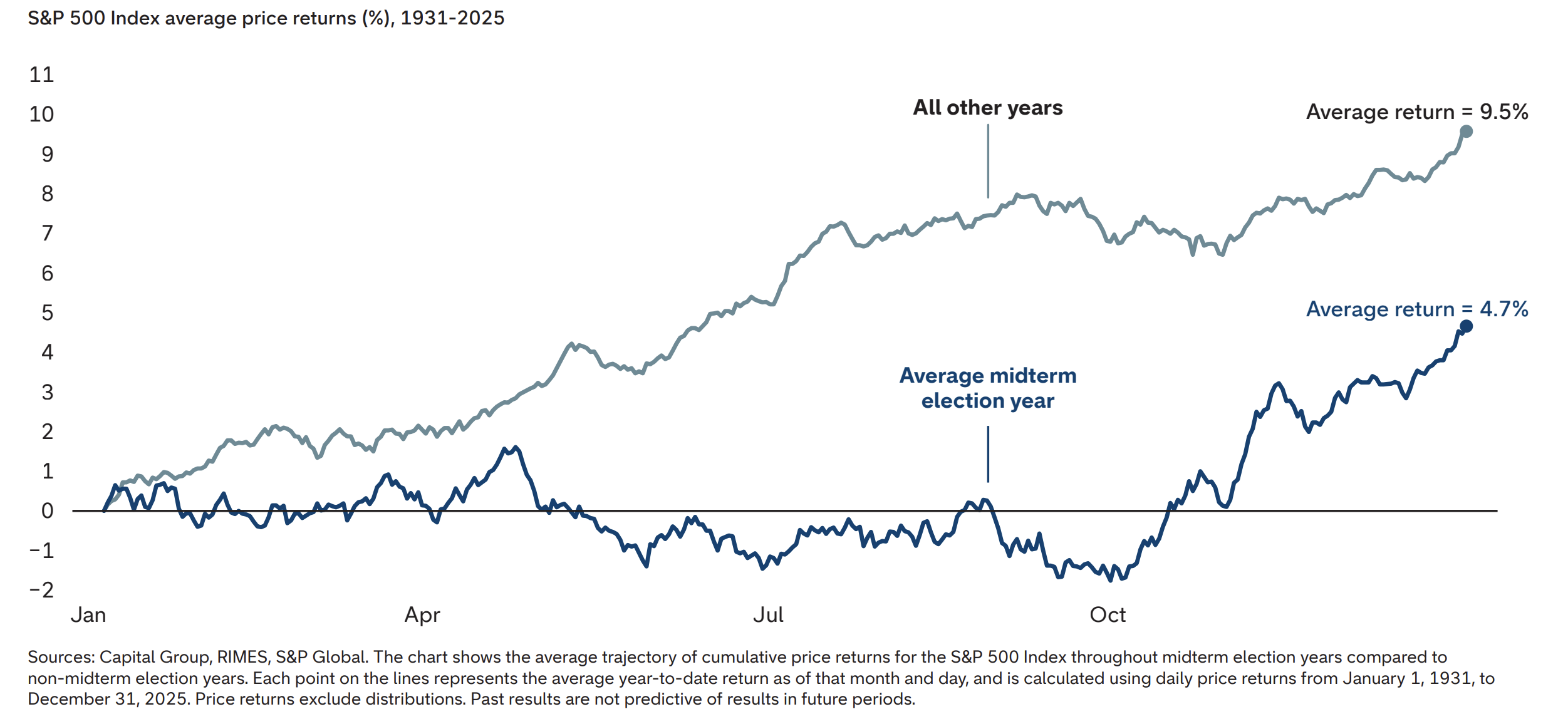
Returns Tend to Be Softer During Midterm Years. Volatility Typically Increases.
Since 1931, the S&P 500 has averaged 4.7% returns during midterm election years and 9.5% returns during all other years. Markets often pause amid uncertainty early in the year before stabilizing later in the cycle. Short-term uncertainty can create slower market momentum, but remaining invested has historically been rewarded.
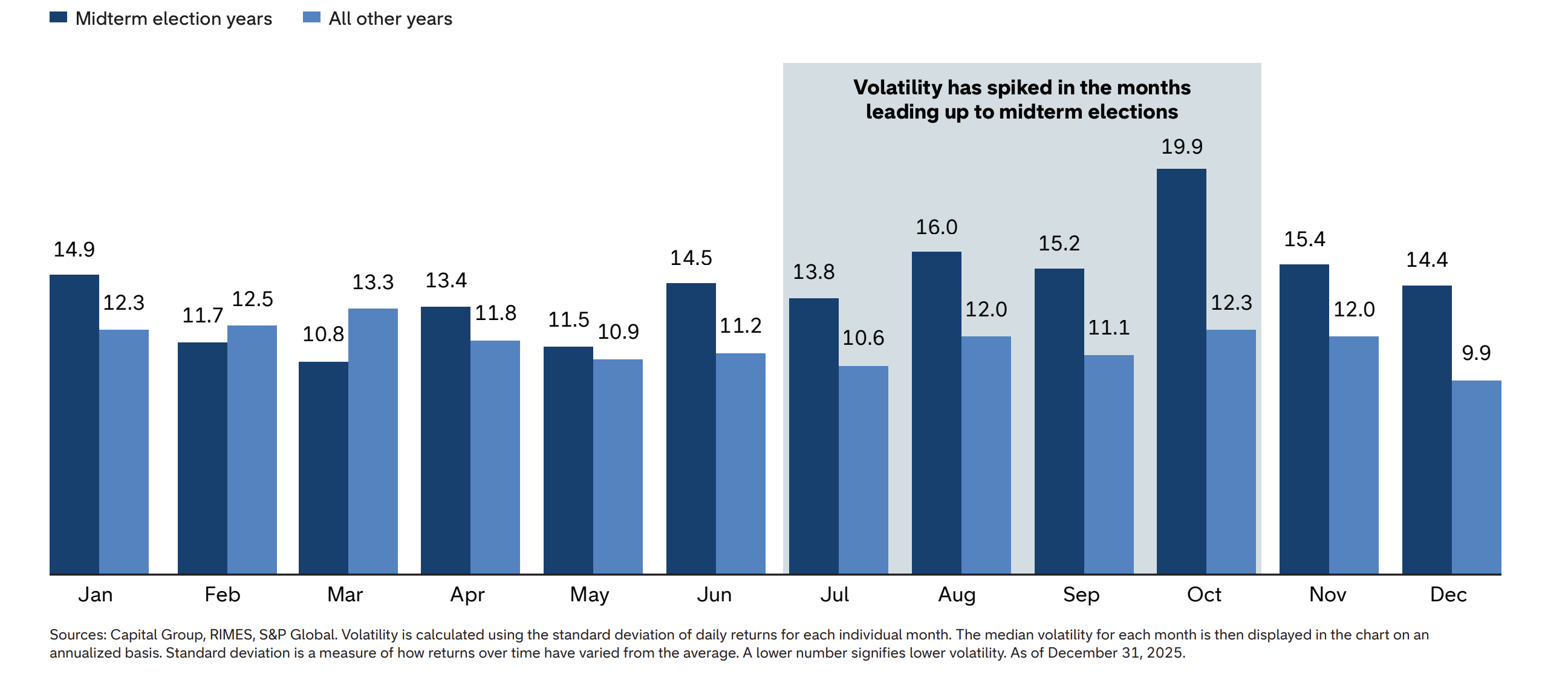
Midterm election years have historically experienced higher market volatility, particularly in the months leading up to Election Day. Increased fluctuations are normal during election cycles and should be expected, not feared.
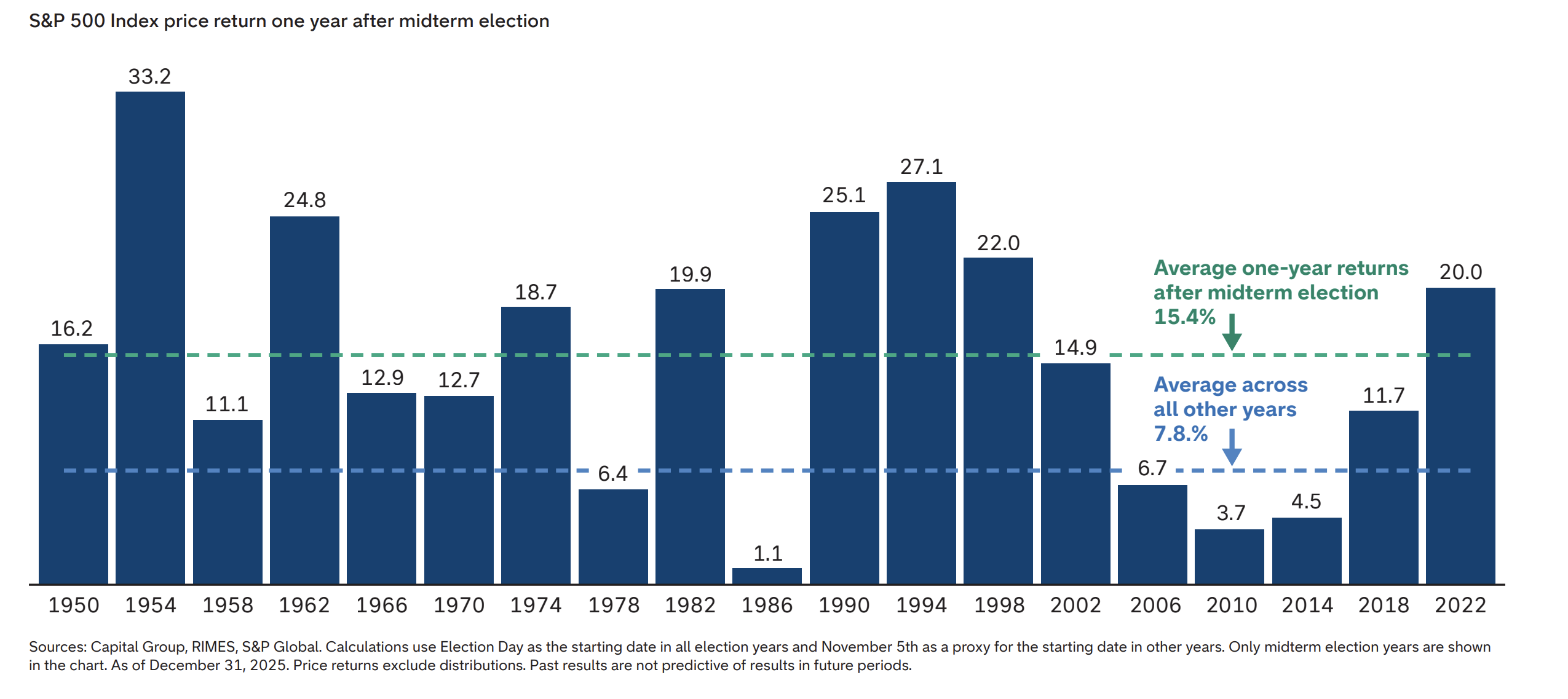
Markets Have Historically Rebounded After Elections.
Markets have often rallied following midterm elections. Since 1950, the average one-year S&P 500 return following a midterm election has been 15.4% compared to 7.8% during comparable non-midterm periods. Political clarity after elections has historically supported stronger market performance.
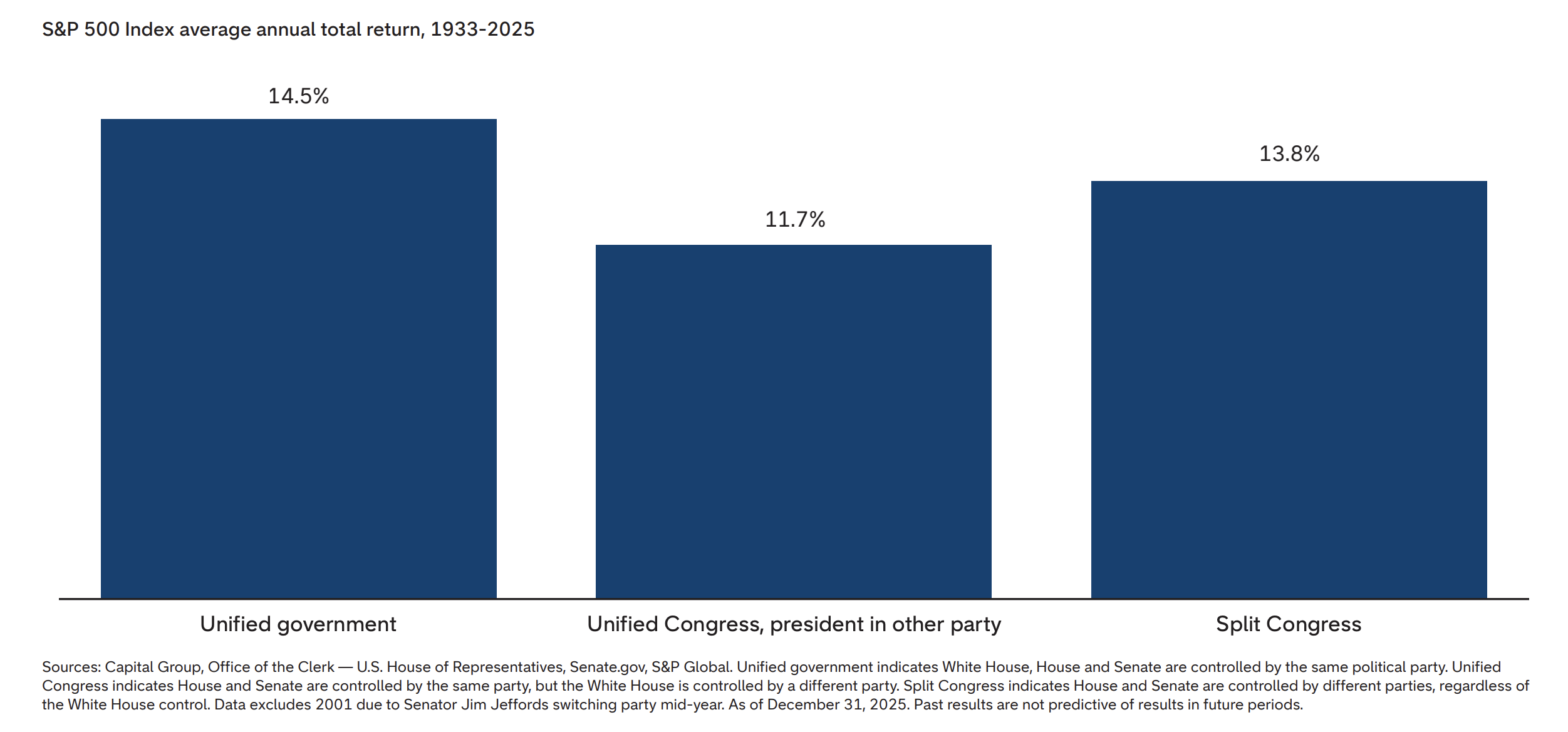
Long-Term Returns Have Been Strong Regardless of Political Control.
Historical data shows markets have produced positive long-term returns under:
- Unified government
- Split Congress
- Opposing-party control
 Corporate earnings, economic growth, innovation, and long-term fundamentals have historically mattered more than election outcomes. Political events can influence short-term market sentiment, but they have historically had limited impact on long-term investment outcomes. Rather than attempting to predict election results or time markets, investors are generally better served by maintaining diversification, staying aligned with long-term goals, rebalancing thoughtfully and remaining disciplined.
For long-term investors, perspective and consistency have historically driven better outcomes than political predictions.
Election cycles are temporary. Financial discipline is timeless.
Important Disclosure
Historical market performance does not guarantee future results. Investing involves risk, including possible loss of principal. This material is for informational purposes only and should not be considered investment, tax, or legal advice. Source: Capital Group, Guide to Midterm Elections (2026)